Red Wedding Lehenga: A Complete Guide to Choosing the Perfect Bridal Look
Published: 15 Jul 2026
Few colours carry as much meaning on a wedding day as red. For generations, the red wedding lehenga has stood as the definitive symbol of an Indian bride a colour linked to prosperity, passion, and new beginnings. Even as pastel and non-traditional shades have found their place on the modern bridal runway, red continues to hold its own as the most searched, most photographed, and most emotionally resonant choice for brides across India and beyond.
If you are in the early stages of planning your bridal wardrobe, chances are “red wedding lehenga” is already on your search list. This guide walks you through everything you need to know before you buy from the symbolism behind the colour, to fabric choices, silhouette options, styling tips, and the questions every bride asks before making this important decision.
Why Red Is Still the Number One Choice for Wedding Lehengas
Red has been the traditional bridal colour in Indian weddings for centuries, and its popularity has not faded with time. In Hindu tradition, red is associated with the planet Mars and is believed to bring energy, courage, and fertility into a marriage. It is also considered an auspicious colour that wards off negativity, which is why it remains the default choice at weddings across most Indian communities, from Punjabi to Bengali to South Indian ceremonies.
Beyond tradition, red also photographs beautifully. It stands out against nearly every wedding backdrop, whether that’s a marble mandap, a lush garden setting, or a banquet hall lit with warm golden lighting. Photographers often note that red lehengas produce some of the richest, most vibrant wedding photographs, which is part of why so many brides continue to choose it even when they have dozens of other colour options available to them.
Finally, red is simply versatile. It pairs well with gold, silver, green, and even contrasting blues, giving designers endless room to create fresh, contemporary takes on a traditional colour.
Popular Shades of Red for Wedding Lehengas
Not all reds are the same, and choosing the right shade can make a significant difference in how the outfit photographs and how it complements your skin tone.
• Classic bridal red – A deep, pure red that is closest to the traditional shade worn for centuries. This works beautifully for most skin tones and is the safest choice for brides who want to stick to convention.
• Maroon-red – A deeper, wine-toned red that leans slightly darker. It suits evening ceremonies and winter weddings particularly well.
• Crimson – A brighter, slightly cooler-toned red that photographs vividly and works well for daytime functions.
• Red with a rust undertone – A warmer variation that has become popular in recent years, especially for brides who want a slightly different take on tradition without moving away from red entirely.
• Ombre red – A gradient effect moving from a deep red at the hem to a lighter shade near the waist, popular in contemporary designer collections .When choosing your shade, it helps to try on a few in natural daylight as well as under indoor lighting, since red can shift in appearance dramatically depending on the light source.
Fabric Choices That Define the Look
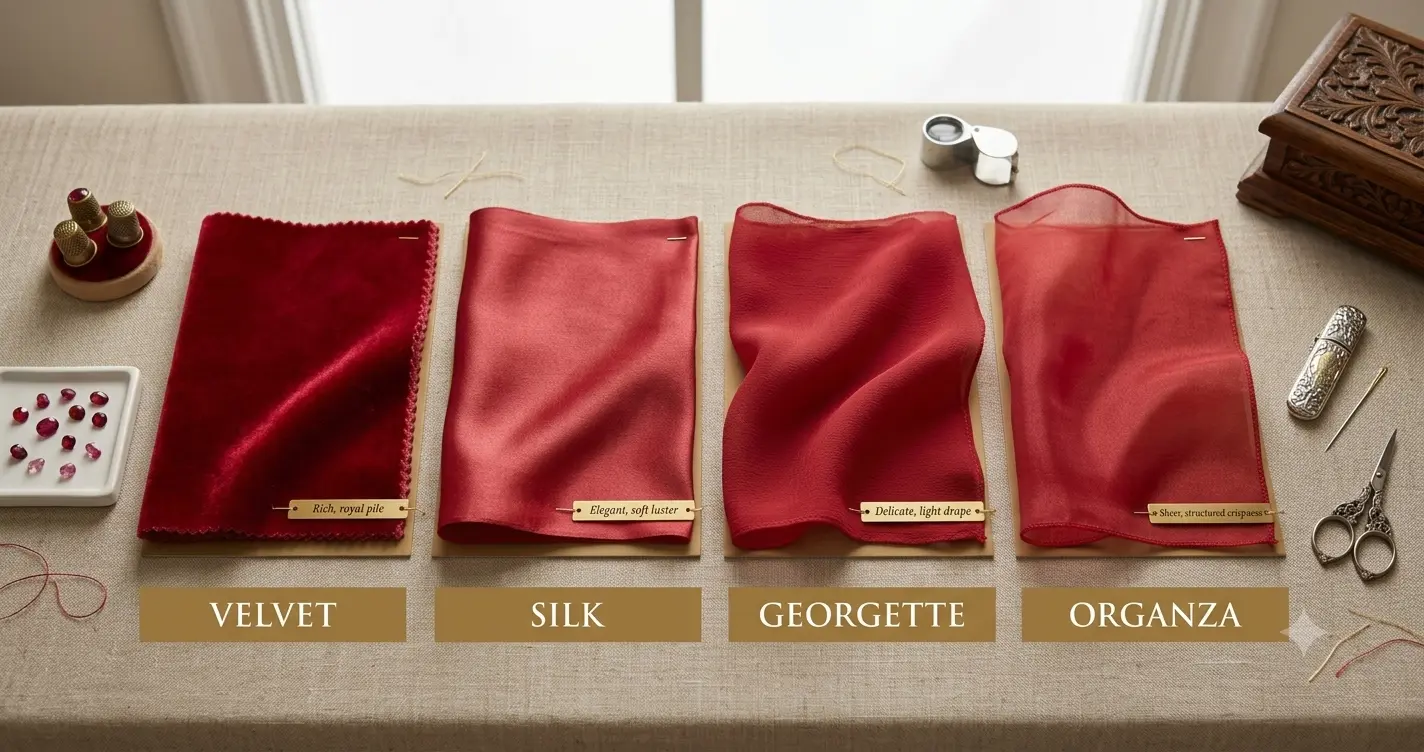
- The fabric of your lehenga plays a major role in how it drapes, how heavy it feels through a long wedding day, and how the embroidery catches the light.
- Velvet has become one of the most requested fabrics for red bridal lehengas in the past few years, particularly for winter weddings. It has a rich, luxurious finish that holds heavy embroidery well and photographs beautifully under both natural and artificial light.
- Silk remains a timeless choice. Raw silk, Banarasi silk, and Kanjivaram silk all offer structure and a natural sheen that pairs well with gold zari work, making it a popular option for brides who want a more traditional silhouette.
- Georgette and net are lighter options, often used for the dupatta or as an overlay on the skirt. They allow for movement and are especially useful for brides marrying in warmer climates or during summer months, where breathability matters as much as appearance.
- Organza has grown in popularity for its structured yet lightweight finish, often used in contemporary lehenga designs that still want volume without the weight of heavier fabrics.
Embroidery and Embellishment Styles
The embroidery on a red lehenga is often what elevates it from a beautiful outfit to a true bridal statement piece.
• Zardozi work – Traditional metallic thread embroidery, often in gold or silver, that has been used on Indian bridal wear for centuries.
• Zari and gota patti – Popular in Rajasthani and North Indian bridal wear, offering a slightly more textured, folk-inspired finish.
• Sequin and stone work – A more contemporary choice that adds shimmer and is particularly popular for evening wedding functions.
• Resham thread embroidery – A softer, more delicate style of embroidery that works well on lighter fabrics like georgette and organza.
• Kundan and pearl detailing – Often used around the neckline or borders to add a regal, finished look.
Many brides today choose a combination of two or three of these techniques to create a one-of-a-kind piece that still honours traditional craftsmanship.
Choosing the Right Silhouette for Your Body Type
- A red wedding lehenga typically falls into one of a few core silhouettes, and choosing the right one for your body type and comfort level can make a noticeable difference in how confident you feel throughout the day.
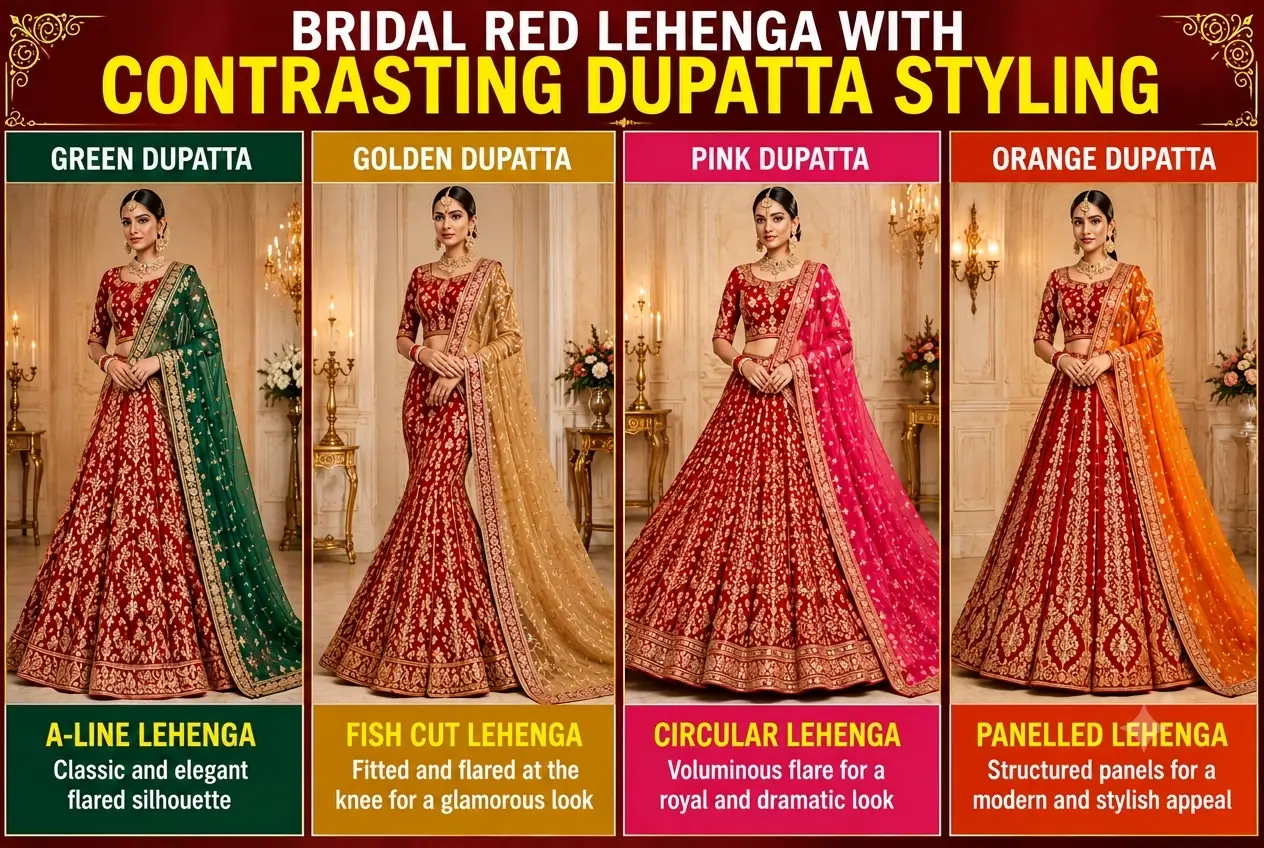
- A-line lehengas are the most universally flattering silhouette, gently flaring out from the waist and suiting almost every body type. They are also relatively comfortable for long ceremonies since they don’t add excessive volume at the hips.
- Fish-cut or mermaid lehengas hug the body through the hips and thighs before flaring out near the knee. This silhouette suits brides who want a more fitted, glamorous look, though it is worth trying on in advance to ensure comfort while sitting through long rituals.
- Circular or lehenga-with-godets styles offer maximum volume and are often chosen for grand, traditional ceremonies where a dramatic silhouette is desired.
- Panelled lehengas use structured panels to create shape while remaining relatively lightweight, making them a popular middle ground between the fitted and voluminous options.
Styling Your Red Wedding Lehenga
- The lehenga itself is only part of the overall bridal look. Jewellery, hairstyle, and makeup all need to work together to complement the outfit.
- Gold jewellery remains the most popular pairing with red, since the warm tones complement each other naturally. Kundan and polki jewellery, in particular, are frequently chosen for their traditional finish. For brides who want a slightly different look, oxidised silver or antique finish jewellery can offer a striking contrast against a deep red lehenga.
- When it comes to makeup, many bridal makeup artists recommend keeping the base look classic and letting the red lehenga be the visual focal point, using bold eyes or a bold lip — but rarely both — to avoid competing with the richness of the outfit.
- For the dupatta, brides increasingly opt for a contrasting border or a dupatta in a slightly lighter shade to add depth to the overall silhouette, rather than matching it exactly to the lehenga.
Regional Variations of the Red Bridal Lehenga
While red is celebrated across nearly every Indian community, the way it is worn and styled often changes from region to region, and understanding these variations can help you decide which tradition you’d like to draw inspiration from.
In Punjabi weddings, red lehengas are often paired with heavy gold jewellery, a chooda, and a statement dupatta, with an emphasis on bold embroidery and a festive, celebratory silhouette. Rajasthani bridal wear frequently favours gota patti work and mirror embellishments, giving the lehenga a folk-inspired richness that feels distinct from other regional styles. Bengali brides, on the other hand, often pair red with white borders inspired by the traditional Benarasi saree, translating that aesthetic into lehenga form for brides who want a fusion of two traditions.
South Indian weddings more commonly favour sarees over lehengas, but red lehengas have grown increasingly popular for reception functions even in these communities, often designed with temple jewellery-inspired borders and motifs. Gujarati and Marwari weddings frequently lean toward brighter, more festive reds paired with mirror work and vibrant dupattas, reflecting the celebratory tone of these ceremonies.
Understanding these regional nuances can be especially useful if you’re blending traditions from two different backgrounds, or simply want to borrow embroidery or styling elements from a region outside your own.
Choosing a Red Lehenga for Different Wedding Functions
Not every red lehenga needs to be reserved for the main wedding ceremony. Many brides now choose red for multiple functions, adjusting the fabric, embellishment, and silhouette depending on the occasion.
For the main wedding ceremony, brides typically choose the most elaborate version of the outfit, often featuring heavy embroidery, a longer train, and a statement dupatta designed to photograph well during rituals.
For a reception, some brides prefer a lighter, more contemporary red lehenga with sequin or stone work rather than heavy traditional embroidery, allowing for easier movement while dancing or greeting guests.
For pre-wedding functions such as an engagement or sangeet, a lighter-weight red lehenga in georgette or organza, with simpler embellishment, is often a more practical and comfortable choice, especially for functions that involve dancing or long hours of standing and mingling with guests.
Thinking through which functions you’ll be wearing red for, and how many outfit changes you’re planning across your wedding functions, can help you prioritise your budget and avoid over-investing in a single piece.
Practical Tips Before You Buy
A few practical considerations can save you time, money, and stress as you shop for your red wedding lehenga.
Start early. Custom bridal lehengas, particularly those with heavy hand embroidery, can take anywhere from a few weeks to several months to complete. Starting your search at least four to six months before the wedding gives you enough time for fittings and alterations.
Try before you commit. Photographs and online listings can be deceiving when it comes to how a shade of red actually looks in person. Always try to see the lehenga in natural daylight before finalising your purchase.
Factor in comfort, not just appearance. A heavily embellished lehenga might look stunning in photos, but if it’s too heavy to sit, kneel, or dance in comfortably, it can become a burden during a long wedding day. Ask about the weight of the outfit, particularly if it involves extensive zardozi or stone work.
Set a realistic budget early. Decide in advance how much of your overall wedding budget you want to allocate to your outfit, and be clear with designers or boutiques about that budget from the start. This helps you avoid falling in love with a piece that’s significantly outside your range.
Plan for alterations. Even a lehenga that fits well off the rack often benefits from small alterations closer to the wedding date, particularly if your measurements shift in the weeks leading up to the big day.
Caring for Your Red Wedding Lehenga After the Wedding
Once the wedding celebrations are over, proper care ensures your red lehenga stays in excellent condition for years to come, whether you plan to pass it down, repurpose it, or simply preserve it as a keepsake.
Store the lehenga in a breathable muslin or cotton cloth rather than plastic, since plastic can trap moisture and cause colours to fade or fabric to weaken over time. Keep embroidered pieces away from direct sunlight during storage, as prolonged exposure can dull the metallic threads and stones. If the lehenga requires cleaning, it is best to consult a professional dry-cleaner who has experience with heavily embellished bridal wear, since regular washing can damage delicate embroidery.
Many brides also choose to reuse elements of their red lehenga, such as the blouse or dupatta, for later functions like anniversaries or family weddings, giving the outfit a longer life beyond the wedding day itself.
Frequently Asked Questions
Is red still considered the most traditional colour for an Indian bridal lehenga?
Yes. Red has been the customary bridal colour across most Indian communities for generations and remains the most searched and most purchased shade for wedding lehengas today, even as other colours have gained popularity in recent years.
Can red wedding lehengas suit every skin tone?
Generally, yes. Because red comes in so many undertones — from cooler crimson to warmer rust-red — there is almost always a shade that complements a given skin tone. Brides with warmer undertones often suit rust-red or maroon shades, while cooler undertones tend to look striking in classic bridal red or crimson.
What is the best fabric for a red lehenga in a summer wedding?
Lighter fabrics such as georgette, organza, and net tend to work best for warmer weather, since they allow better airflow and feel less heavy over the course of a long ceremony. Velvet and heavier silks are generally better suited to winter weddings.
How much does a red bridal lehenga typically cost?
Pricing varies enormously depending on fabric, embroidery, and whether the piece is designer or custom-made. Simpler designs with machine embroidery are more affordable, while heavily hand-embroidered pieces using zardozi or kundan work sit at the higher end of the price range. It’s worth setting a budget early and prioritising which elements — fabric, embroidery, or design — matter most to you.
Should the dupatta match the lehenga exactly, or can it be a different shade?
Both approaches work well. A matching dupatta creates a seamless, traditional look, while a contrasting or lighter-shade dupatta adds depth and dimension, which many contemporary brides prefer for a more layered, editorial finish.
Final Thoughts
Choosing a red wedding lehenga is as much about honouring tradition as it is about finding a piece that reflects your personal style. With so many shades, fabrics, silhouettes, and embroidery styles available today, there is no shortage of ways to make this timeless colour feel entirely your own. Whether you lean toward a classic velvet lehenga with zardozi embroidery or a lighter georgette piece with delicate resham work, the key is choosing an outfit that makes you feel confident, comfortable, and unmistakably bridal on your big day.
Take your time exploring options, try different shades under different lighting, and don’t be afraid to mix traditional embroidery techniques with more contemporary silhouettes. A red wedding lehenga is a once-in-a-lifetime investment, and getting the details right will ensure it remains a cherished part of your wedding memories for years to come.



- Be Respectful
- Stay Relevant
- Stay Positive
- True Feedback
- Encourage Discussion
- Avoid Spamming
- No Fake News
- Don't Copy-Paste
- No Personal Attacks
- Be Respectful
- Stay Relevant
- Stay Positive
- True Feedback
- Encourage Discussion
- Avoid Spamming
- No Fake News
- Don't Copy-Paste
- No Personal Attacks
