Navratri Colours Saree Guide: 9 Days, 9 Colours & What to Wear
Published: 17 Jul 2026
Navratri is one of the most joyous times of the year, and if there is one tradition that makes the festival even more special, it is dressing up in the right colour every single day. If you have been searching for the perfect Navratri colours saree guide to plan your nine-day wardrobe in advance, you are in exactly the right place.
Every day of Navratri is associated with a specific colour, and each colour carries its own meaning tied to one of the nine forms of Goddess Durga. Wearing the correct shade is not just a fashion statement anymore for many women, it has become a fun, almost ritualistic way to feel connected to the festival while still looking effortlessly elegant in a saree.
This colour-coordination habit has also grown into something of a social event in its own right. Garba and dandiya venues across cities now feel like a wave of colour moving in unison each night, and many women plan their entire nine-day wardrobe weeks in advance just to make sure they never repeat a shade or clash with the day’s theme. Sarees, in particular, have become a favourite choice for this tradition because the drape offers a large, uninterrupted canvas of colour that stitched outfits simply cannot match.
In this guide, we will walk you through the complete day-wise Navratri colour list, the significance behind each shade, practical saree styling ideas, fabric recommendations, and answers to the most common questions women ask while planning their festive wardrobe — so you are never confused about what to wear, whether you are heading to a garba night, attending a puja at home, or simply going to work during the festive week.
Why Colours Matter So Much During Navratri
Before we get into the day-by-day breakdown, it helps to understand why this tradition even exists. Navratri literally means “nine nights,” and each night is dedicated to a different avatar of Goddess Durga Shailaputri, Brahmacharini, Chandraghanta, Kushmanda, Skandamata, Katyayani, Kalaratri, Mahagauri, and Siddhidatri.
Over the years, a popular custom emerged, especially in urban India, of assigning a colour to each of these nine days. Wearing that colour is believed to bring positive energy, align with the mood of the goddess being worshipped that day, and create a beautiful, coordinated visual when large groups gather for garba and dandiya nights. A sea of matching colours across a community hall is genuinely a stunning sight, and it is one of the reasons this trend has only grown stronger year after year.
For sarees specifically, this tradition works beautifully because the drape gives you a large, flowing canvas to showcase a single bold colour, unlike stitched outfits where colour blocking can sometimes break the visual impact.
It’s worth noting that the specific colour chart can vary slightly depending on the source, the region, and even the year, since there is no single official version handed down through scripture. What you will find below is the most widely followed version across India today, and it is the one most saree retailers, event organisers, and fashion publications currently reference each festive season.
Navratri 9 Days, 9 Colours: The Complete Saree Guide
Here is the day-wise colour breakdown along with saree ideas for each one.
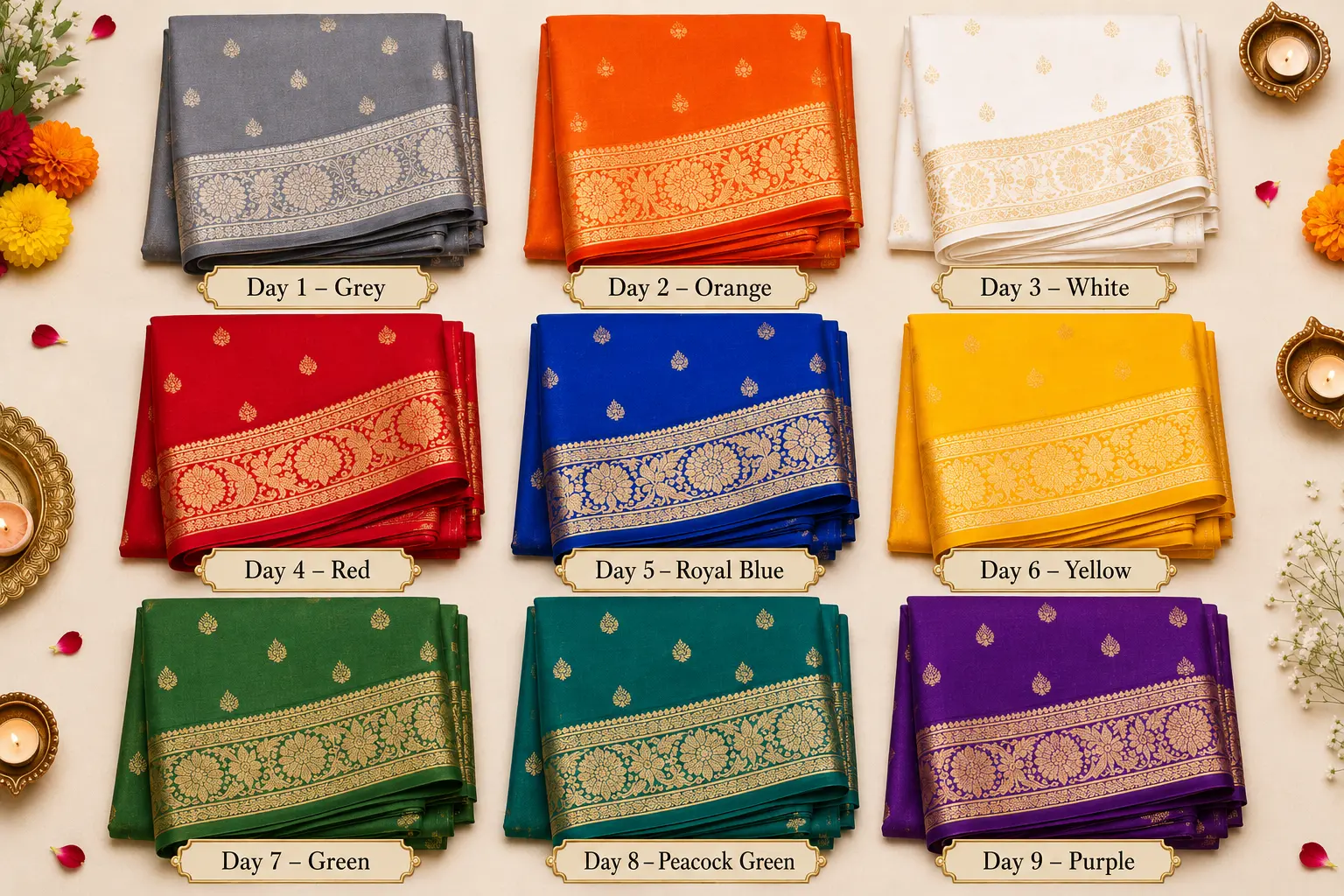
Day 1: Grey
The festival opens with Shailaputri, the daughter of the mountains and a symbol of strength and stability, and the colour associated with the first day is grey. Grey might sound like an unusual choice for a festive saree, but it can look surprisingly elegant when done right. Look for a grey georgette or chiffon saree with silver zari work, sequins, or delicate mirror embellishments. Pair it with a contrasting blouse in maroon or wine to add warmth, and finish the look with oxidised silver jewellery for an edgy, festive vibe. This combination works particularly well for the first evening of celebrations, when the mood is still building and a slightly understated palette feels appropriate.
Day 2: Orange
Day two honours Brahmacharini, representing devotion and penance, and orange takes centre stage. This is one of the easiest colours to style dramatically. A pure silk or Banarasi saree in a rich orange with gold zari borders instantly feels celebratory. If you prefer something lighter for daytime events, an orange georgette saree with tassels and simple gota work works just as well. Gold jewellery is the natural pairing here, and a bindi in a matching shade of orange or maroon ties the whole look together.
Day 3: White
The third day is dedicated to Chandraghanta, whose name refers to the crescent moon on her forehead, and white is the colour of the day. A white saree can easily look plain if not styled thoughtfully, so lean into texture and embellishment — think white organza with silver thread embroidery, or a white saree with a heavily embroidered contrast blouse in gold, red, or royal blue. White also photographs beautifully for daytime garba sessions and works well for women who prefer a softer, more understated festive look that still feels intentional.
Day 4: Red
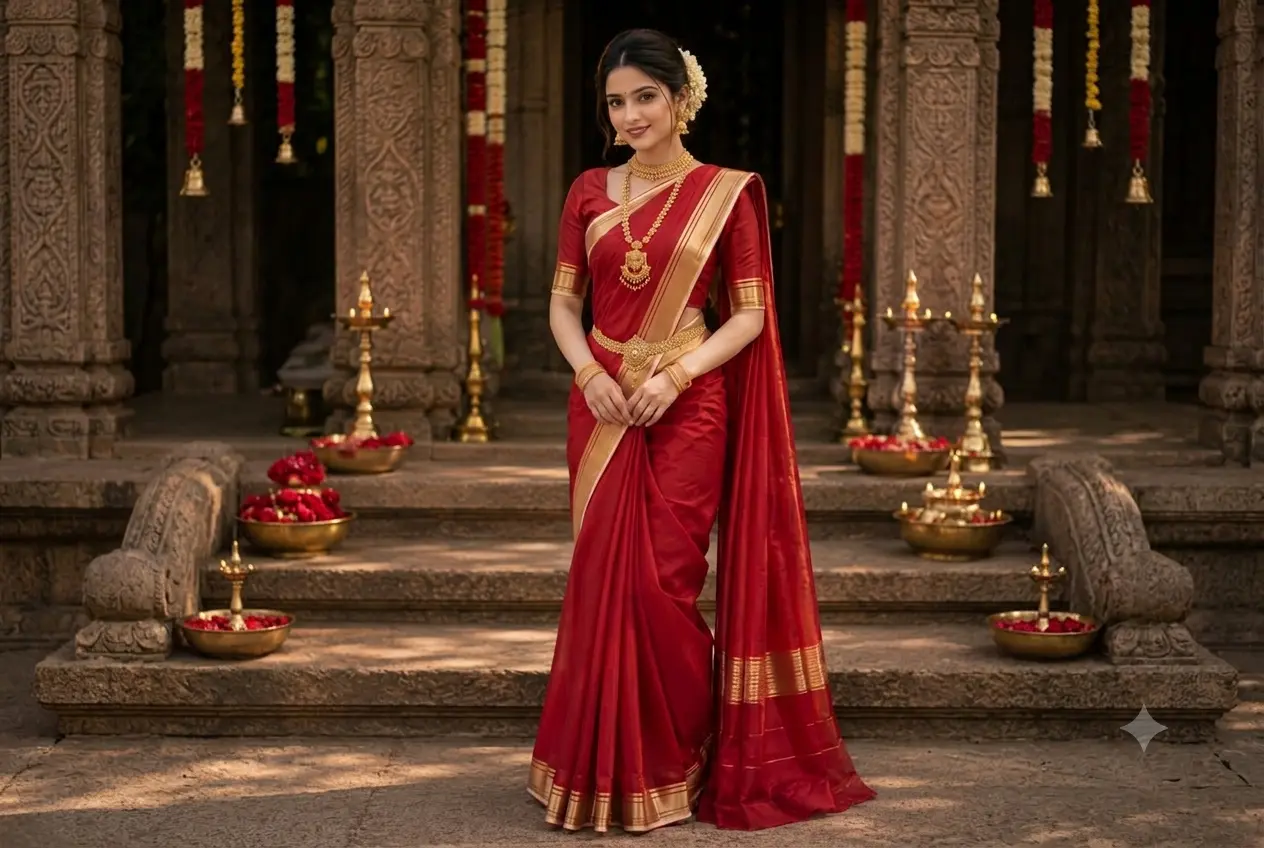
Red belongs to Kushmanda, believed to be the creator of the universe, and it is arguably the most loved colour of the entire festival. A red Banarasi, Kanjivaram, or georgette saree with gold detailing feels regal and works for everything from temple visits to evening garba. Red also happens to be one of the most searched shades for Navratri and wedding-season dressing alike, so it is worth investing in a versatile red saree that can be reused beyond the festival for other celebrations, including engagements and receptions.
Day 5: Royal Blue
Skandamata, mother of Skanda and a symbol of nurturing strength, is honoured with royal blue on the fifth day. This deep, jewel-toned shade looks stunning in silk and satin fabrics. A royal blue saree with silver or gold sequin work creates a striking contrast against the colour, and pairing it with statement earrings elevates the entire look for an evening event. This is also a great colour choice for women who want something bold but slightly more formal than the brighter shades earlier in the week.
Day 6: Yellow
Day six celebrates Katyayani, a fierce and warrior-like form of the goddess, and yellow brings a burst of sunshine to the mid-week festivities. A mustard or bright yellow chiffon saree with a contrasting green or pink blouse creates a cheerful, high-energy look that photographs wonderfully under festive lighting. Yellow is also a flattering colour across most skin tones, making it a safe yet vibrant choice for both daytime pujas and evening garba sessions.
Day 7: Green
Kalaratri, the fierce protector who destroys darkness, is represented by green on the seventh day. Emerald or bottle green sarees in silk or velvet feel luxurious, while a lighter mint or parrot green georgette saree suits daytime events better. Green pairs beautifully with gold jewellery and works particularly well for women who want a colour that feels festive without being overly bright, making it a good choice for office-appropriate Navratri dressing as well.
Day 8: Peacock Green or Blue
Mahagauri, known for her serene and radiant appearance, is associated with peacock green, sometimes interpreted as a peacock blue-green shade. This is a slightly unconventional but extremely photogenic colour choice. A peacock-toned silk saree with contrasting gold or copper embroidery stands out beautifully at garba nights, especially under coloured festival lighting, and tends to photograph exceptionally well for social media.
Day 9: Pink
The final day honours Siddhidatri, believed to bestow all forms of perfection and accomplishment, and pink closes the festival on a soft, celebratory note. A pastel pink saree feels romantic and gentle, while a hot pink or fuchsia saree brings high drama for the last big night of dandiya. Pink pairs effortlessly with both gold and silver jewellery, giving you flexibility depending on your accessories, and makes for a memorable, feminine finish to the nine-day celebration.
How to Style Your Navratri Saree Beyond Just Colour
While getting the colour right is the foundation, a few additional styling choices can make your Navratri saree look complete.
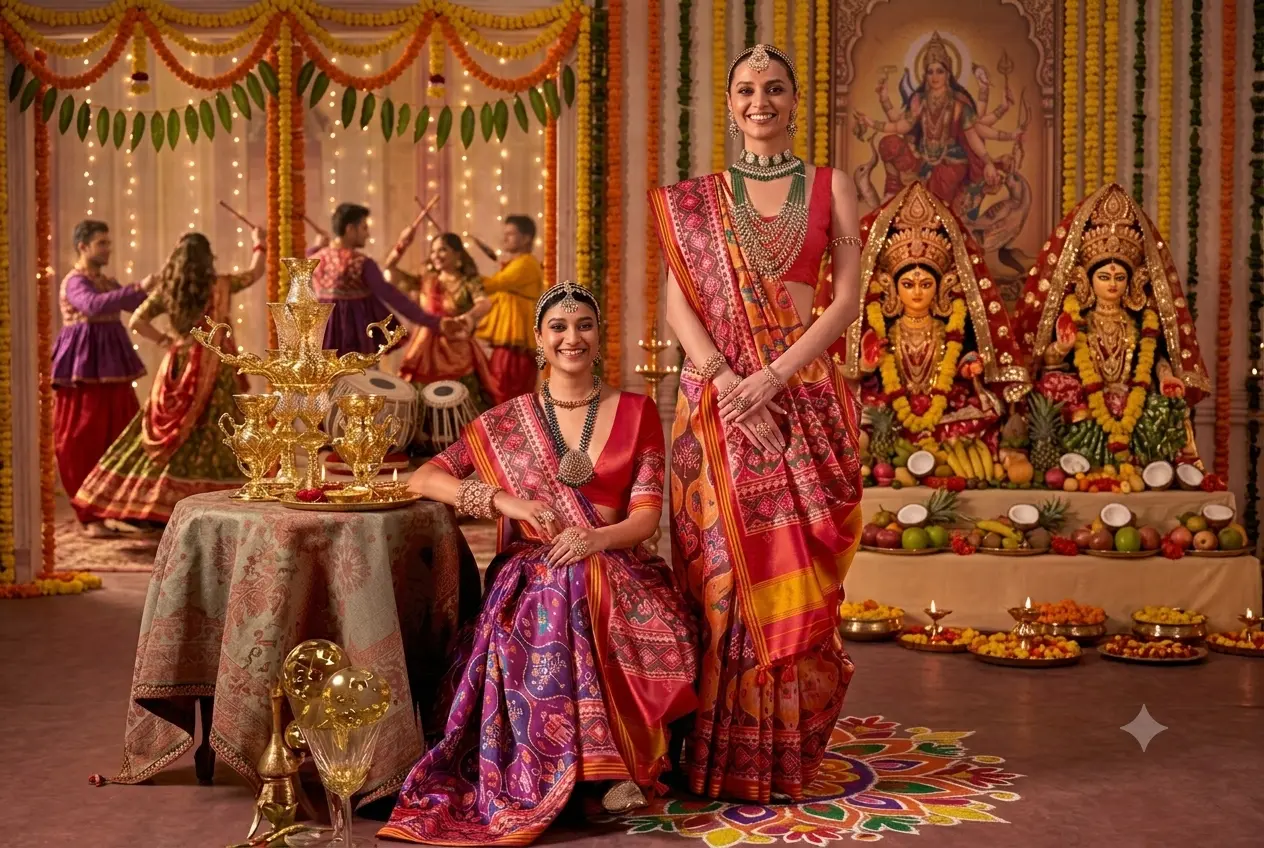
- Fabric choice matters. Georgette and chiffon sarees are ideal for garba nights since they allow easy movement while dancing. Silk and Banarasi sarees work best for puja mornings, family gatherings, or the more formal evenings of the festival.
- Blouse design can transform the look. A simple saree instantly looks festive with a heavily embellished, contrasting blouse. Off-shoulder, backless, or halter-neck blouses are popular choices for evening garba events, while more traditional high-neck or elbow-sleeve blouses suit daytime pujas.
- Draping style adds versatility. The traditional Gujarati “seedha pallu” drape, where the pallu is brought to the front, is especially popular during Navratri since it beautifully displays embroidery and border work while also being practical for dancing.
- Accessories complete the picture. Oxidised silver jewellery, statement bangles, and jhumkas are festival favourites, while a small potli bag or clutch keeps the look practical for long evenings of dandiya.
Choosing the Right Saree Style for Your Navratri Plans
Not every Navratri outing calls for the same kind of saree, and thinking about the occasion first can make shopping much easier.
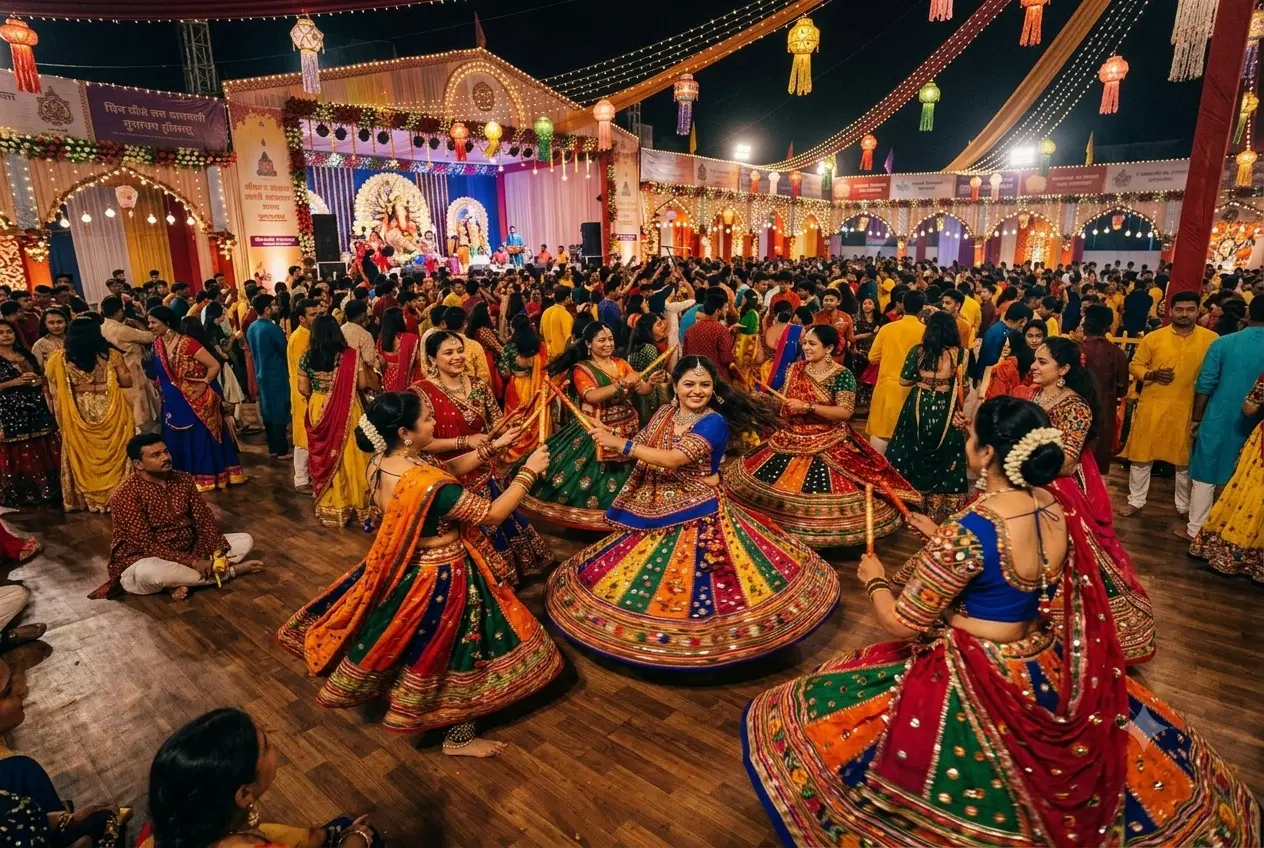
- For garba and dandiya nights, prioritise comfort and movement above everything else. Lightweight georgette or chiffon sarees, pre-stitched or ready-to-wear sarees, and lehenga-style saree drapes have become especially popular because they let you dance freely for hours without constantly readjusting the pallu or pleats.
- For puja mornings and family gatherings, richer fabrics like silk, Banarasi, and Kanjivaram feel more appropriate and align with the more traditional, devotional mood of the occasion. These sarees also tend to hold their shape and drape better for long periods of sitting during aarti or bhog.
- For office wear during the festive week, lighter cotton-silk or linen-blend sarees in the day’s designated colour let you participate in the tradition without feeling overdressed for a workday. A simple border and minimal embellishment keep the look professional while still festive.
- For photography and social media, colours like peacock green, royal blue, and fuchsia pink tend to stand out the most under artificial and string lighting typically used at garba venues, so if you are planning specific outfits around photos, these are worth prioritising.
How to Build a Budget-Friendly Nine-Day Saree Wardrobe
Buying nine brand-new sarees is not realistic or necessary for most women, and a little planning can stretch your existing wardrobe considerably. Start by taking stock of sarees you already own and matching them against the colour chart you may be surprised how many days you can already cover. For colours you don’t have, consider borrowing from family members, since sarees are often shared more easily than stitched outfits of different sizes.
Investing in two or three versatile, high-impact blouses in gold, silver, and a neutral shade can also help, since a striking blouse can make even a simple, inexpensive saree look festive. Accessories are another cost-effective way to change up a look a different set of jhumkas, bangles, or a maang tikka can make the same saree feel entirely new across different days.
Common Mistakes to Avoid While Choosing Navratri Sarees
Many women unintentionally make small styling mistakes during the nine-day stretch. Choosing a fabric that is too heavy for dancing can make evenings uncomfortable, so it’s worth saving richer silks for days you know will be less dance-focused. Another common issue is repeating the same blouse across multiple outfits, which can make even different sarees feel visually similar in photographs, especially when the same look is being shared across social media over consecutive days.
Over-accessorising is another pitfall piling on multiple statement pieces at once can end up competing with the saree itself rather than complementing it. It generally works better to pick one focal accessory, such as a statement necklace or a maang tikka, and keep the rest of the jewellery relatively simple.
Lastly, skipping comfortable footwear in favour of style alone often backfires during long garba nights, so it helps to prioritise flats, juttis, or low block heels that still complement the outfit without compromising on hours of standing and dancing.
Frequently Asked Questions
1. What are the 9 colours of Navratri in order?
The traditional order is grey, orange, white, red, royal blue, yellow, green, peacock green, and pink, corresponding to each of the nine days of the festival.
2. Can I wear a different colour than the one assigned for the day?
Yes, absolutely. While the colour chart is a popular tradition, it is not mandatory. Many women choose colours based on what suits them best or what they already own, and there is no religious requirement to follow the chart strictly.
3. What is the best saree fabric for Navratri garba nights?
Lightweight fabrics like georgette, chiffon, and organza are ideal for garba and dandiya nights since they move well and keep you comfortable during long hours of dancing.
4. Which Navratri colour is considered the luckiest?
Red is often considered especially auspicious in Indian culture and is one of the most popular colours during Navratri, though every colour in the nine-day chart carries its own positive significance tied to the goddess of that day.
5. How can I style one saree to look different across multiple Navratri days?
Changing the blouse, draping style, and jewellery can make the same saree feel completely different. A contrasting blouse or a different draping technique, like switching between a traditional pallu and a front pallu style, is an easy way to create variety without buying multiple outfits.
Final Thoughts
Navratri is as much about celebration and devotion as it is about self-expression through colour, and a saree remains one of the most graceful ways to do that. Whether you are following the traditional day-wise colour chart strictly or simply picking up ideas that suit your personal style, the key is to enjoy the process. Keep this guide handy through all nine days, mix in your own creative touches with blouse designs and accessories, and you will have a stunning, colour-coordinated festive wardrobe ready to go.



- Be Respectful
- Stay Relevant
- Stay Positive
- True Feedback
- Encourage Discussion
- Avoid Spamming
- No Fake News
- Don't Copy-Paste
- No Personal Attacks
- Be Respectful
- Stay Relevant
- Stay Positive
- True Feedback
- Encourage Discussion
- Avoid Spamming
- No Fake News
- Don't Copy-Paste
- No Personal Attacks
