Straight Salwar: A Complete Guide to Styles, Fabrics & How to Wear Them
Published: 17 Jul 2026
The straight salwar has quietly become one of the most reliable pieces in Indian ethnic wardrobes today. It doesn’t chase trends the way some silhouettes do, and that’s exactly its strength. Whether you’re heading to work, attending a family function, or simply want something comfortable yet put-together for daily wear, the straight salwar delivers a clean, flattering shape that works across body types, ages, and occasions.
If you’ve ever stood in front of a rack of salwar suits wondering what makes the “straight” cut different from a patiala, palazzo, or churidar, or if you’re simply curious about how to style one well, this guide walks you through everything from fabric choices to occasion-wise styling, so you can shop and wear straight salwars with confidence.
This guide is written for anyone building or refreshing an ethnic wardrobe, whether you’re a first-time buyer trying to understand the different salwar cuts available, or someone who already owns a few straight salwar suits and wants to get more styling mileage out of them. By the end, you’ll know exactly which fabric, color, and length suits your body type and occasion best.
What Is a Straight Salwar?
A straight salwar is a trouser-style bottom that is cut in a fitted, straight-line silhouette from waist to ankle, unlike the gathered, voluminous folds of a traditional patiala salwar or the flowing width of palazzo pants. It sits close to the leg with minimal flare, giving it a tailored, almost trouser-like appearance while still retaining the comfort and ease of traditional Indian bottomwear.
This silhouette is typically paired with a matching or contrasting kurta or kameez, forming what is widely known as a “straight suit” or “straight salwar suit.” The overall look is neat, structured, and versatile equally suited to a busy workday or a festive gathering, depending on the fabric and embellishment.
Straight Salwar vs Other Salwar Styles
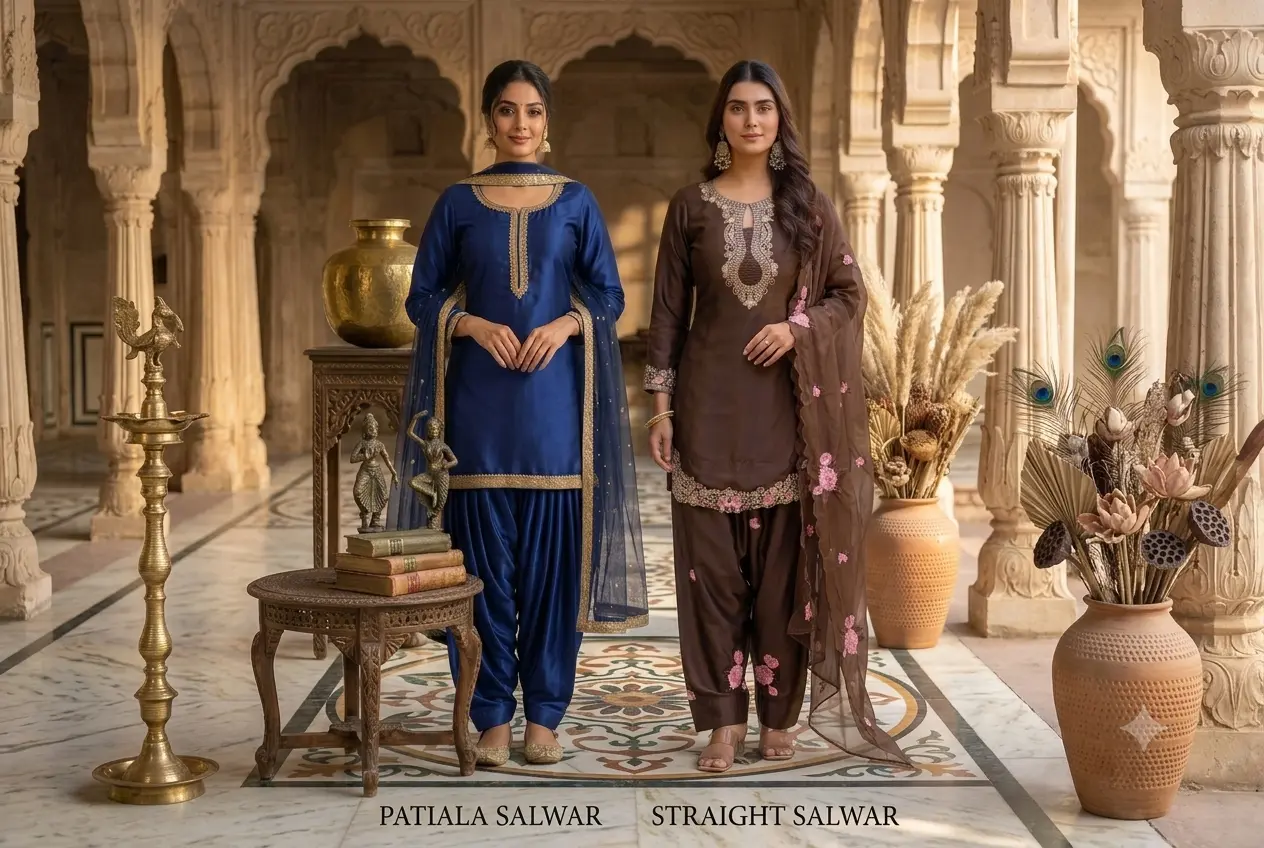
Understanding how the straight salwar differs from other popular styles can help you choose the right fit for your body type and occasion.
• Patiala Salwar: A voluminous, pleated silhouette with generous folds at the waist that gather at the ankle. Best for festive, statement looks.
• Churidar: A fitted, ankle-length bottom with gathers at the hem for a crushed, bangle-like effect. Popular for both casual and formal ethnic wear.
• Palazzo: Wide-legged and flowing from waist to hem, offering a relaxed, breezy fit. Favoured in contemporary and fusion wear.
• Straight Salwar: A straight-cut trouser with minimal flare, offering a clean, structured silhouette that sits between the fitted churidar and the loose palazzo.
The straight salwar essentially occupies the middle ground , more relaxed than a churidar, more fitted than a palazzo, and far less voluminous than a patiala. This balance is precisely why it has become a go-to choice for everyday ethnic wear, and why so many first-time buyers gravitate toward it before experimenting with more elaborate silhouettes.
Why Choose a Straight Salwar?
- Universally Flattering Silhouette
Because the straight salwar doesn’t add volume at the hips or ankles, it tends to elongate the legs and create a streamlined look. This makes it a popular choice for petite frames as well as taller women who want a proportionate, balanced silhouette. - All-Day Comfort
Unlike tighter churidars, the straight salwar offers breathing room through the leg while still maintaining a tidy shape. This makes it ideal for long work days, travel, or festive occasions where you’ll be on your feet for hours. - Effortless Versatility
A straight salwar suit can be dressed up with embroidery, mirror work, or zari detailing for weddings and festivals, or kept simple in cotton or linen for daily office wear. Few Indian ethnic silhouettes offer this range. - Easy to Style and Accessorize
Because the shape is clean and uncomplicated, it pairs effortlessly with dupattas, statement jewelry, jackets, and even Western layering pieces like denim jackets or blazers for a fusion look.
Best Fabrics for Straight Salwar Suits
The fabric you choose plays a major role in how the straight salwar looks, feels, and drapes. Here’s a breakdown of the most popular options.
• Cotton: Lightweight, breathable, and perfect for daily wear or hot climates. Cotton straight salwar suits are a staple for office wear and casual outings.
• Rayon: Adds a soft drape and subtle sheen, making it suitable for semi-formal occasions and gifting.
• Georgette: Offers a rich, festive look with a smooth finish, ideal for parties, engagements, and celebrations.
• Crepe: A crisp, structured fabric that holds the straight silhouette particularly well, often used in formal and office-appropriate suits.
• Silk: Best reserved for weddings and grand festive events, offering a luxurious sheen and body suited to heavier embroidery.
• Linen: A breathable, eco-friendly choice that works beautifully for summer and daytime events, especially in warmer regions.
For everyday wear, cotton and rayon remain the most practical choices, while georgette and silk are better suited to occasion wear where drape and shine matter more than breathability.
How to Style a Straight Salwar Suit
For the Workplace
Pair a solid-colored straight salwar suit in cotton or crepe with minimal embroidery for a polished, professional look. Keep jewelry understated — small earrings and a thin bracelet work well and opt for block heels or comfortable flats.
For Festive Occasions
Choose georgette or silk straight salwar suits with embroidery, sequins, or zari work. Layer with a contrasting dupatta and add statement earrings, bangles, and a potli bag to complete the festive look.
For Casual Outings
A printed cotton straight salwar suit paired with juttis or sandals makes for an easy, comfortable outfit for daytime errands, brunches, or casual family gatherings.
For a Fusion Look
Pair your straight salwar with a short kurti, a crop top, or even layer a denim jacket over it. This fusion styling is increasingly popular among younger women who want to blend ethnic and Western elements.
Popular Colors and Prints in Straight Salwar Suits
Color and print choices can completely transform how a straight salwar suit reads , from subtle and office-appropriate to bold and celebratory. Understanding which shades and patterns suit which occasions can make shopping far easier.
Solid and Pastel Tones
Soft pastels like blush pink, mint green, powder blue, and lilac are extremely popular for daytime wear and office settings. Solid, muted tones photograph well and pair easily with statement dupattas or jewelry when you want to dress the outfit up later in the day.
Bold and Jewel Tones
Deep jewel shades such as emerald green, maroon, royal blue, and mustard yellow are commonly chosen for festive and wedding-season straight salwar suits. These colors carry richness even in simpler fabrics, which is why they remain favorites for Diwali, Eid, and wedding functions.
Prints and Patterns
Block prints, floral motifs, and geometric patterns are widely used on cotton straight salwar suits, making them ideal for casual and everyday wear. Digital prints have also grown popular in recent years, offering vibrant, photo-realistic patterns on lightweight fabrics suited to summer.
Straight Salwar Suits for Different Body Types
One of the biggest advantages of the straight salwar is how adaptable it is across body types. A few styling considerations can help you get the most flattering fit.
• Petite frames: A knee-length or slightly longer kurta with a straight salwar creates the illusion of height and avoids visually shortening the frame.
• Curvier frames: A well-fitted straight salwar with a slightly flared kurta at the hem helps balance proportions without adding bulk.
• Tall frames: Almost any length or print works well, though longer kurtas with straight salwars create an elegant, elongated silhouette.
• Athletic or straight frames: Straight-cut kurtas paired with straight salwars in the same tonal family create a streamlined, column-like effect that many find flattering.
Caring for Your Straight Salwar Suit
Proper care extends the life of your straight salwar suit and keeps colors and embroidery looking fresh for longer.
• Washing: Cotton and linen straight salwar suits can typically be machine washed on a gentle cycle, but should be washed separately for the first few washes to prevent color bleeding.
• Dry cleaning: Silk, georgette, and heavily embroidered straight salwar suits are best dry-cleaned to preserve embellishments and prevent fabric damage.
• Storage: Store festive straight salwar suits with embroidery in a muslin or cotton cloth bag rather than plastic, to allow the fabric to breathe and prevent yellowing.
• Ironing: Iron on the reverse side for prints and embroidered pieces to protect delicate detailing and prevent color fading from direct heat.
Straight Salwar Suits Across Seasons
Because the straight salwar is available in such a wide range of fabrics, it can realistically be worn year-round with a few seasonal adjustments.
Summer
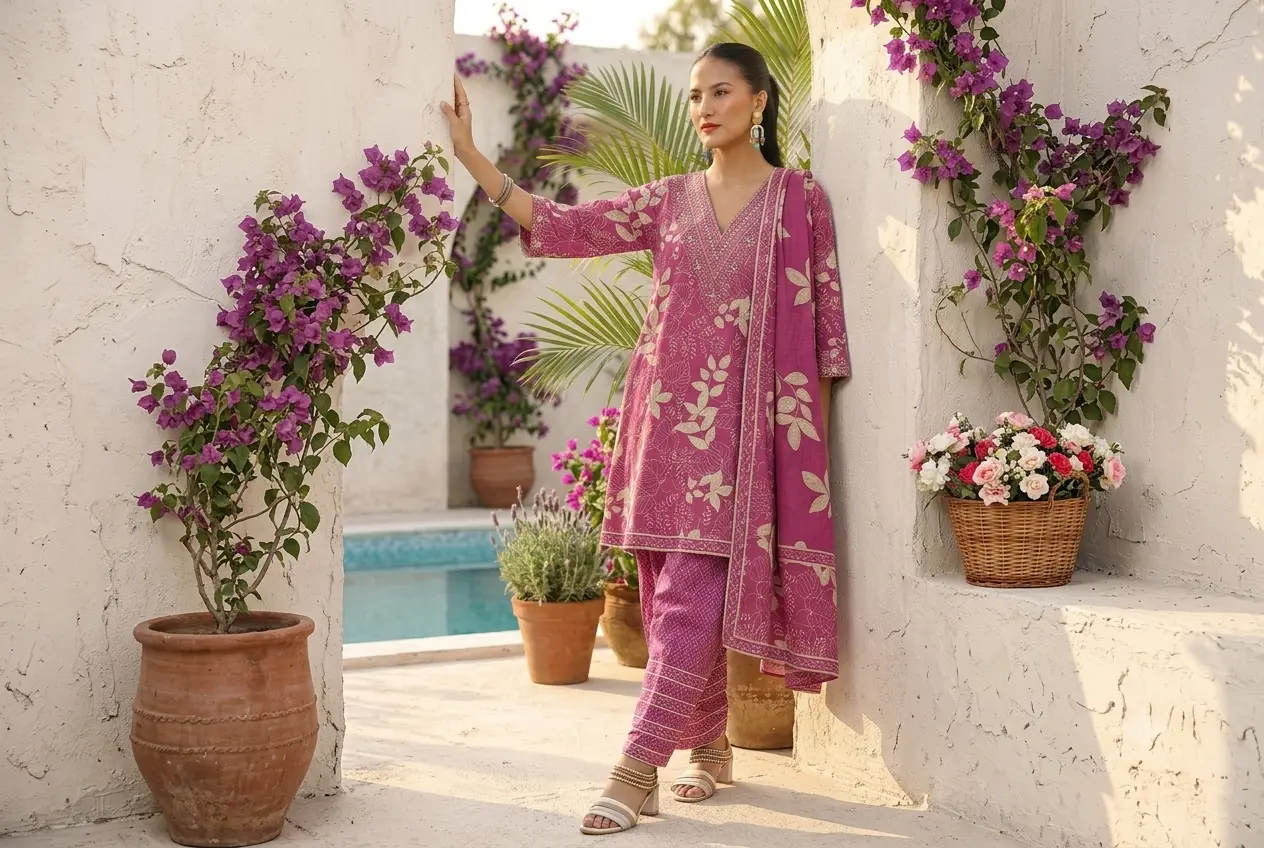
Lightweight cotton, linen, and chanderi straight salwar suits in lighter shades help keep you cool while still looking polished. Pastel and white-based prints are especially popular during the hotter months.
Monsoon
Quick-drying fabrics like rayon and cotton blends work well during monsoon season, since they resist clinging and dry faster than heavier silks or georgettes.
Winter and Festive Season
Richer fabrics such as silk, velvet blends, and heavier georgette come into their own during winter and the festive season, when straight salwar suits are often layered with shawls, jackets, or statement stoles.
Why Straight Salwar Suits Remain a Wardrobe Favorite
Fashion trends in ethnic wear tend to move quickly, with palazzo sets, sharara suits, and Indo-western fusion pieces all taking turns in the spotlight. Yet the straight salwar suit has maintained a steady, consistent presence through all of it. Part of this staying power comes from its practicality , it photographs well, moves comfortably, and doesn’t require the wearer to compromise between comfort and elegance.
For a new wardrobe, building around a few well-made straight salwar suits in versatile colors like white, beige, navy, and maroon gives you a strong foundation that can be dressed up or down depending on the occasion, season, or mood. Add one or two festive pieces in richer fabrics, and you’ll have a wardrobe that covers nearly every ethnic wear occasion you’re likely to encounter.
It’s also worth noting that the straight salwar suit adapts well to changing fashion sensibilities without requiring a complete wardrobe overhaul each season. A simple change in dupatta style, jewelry, or footwear is often enough to make the same suit feel fresh for a different occasion, which makes it a genuinely cost-effective choice over time compared to more trend-driven silhouettes that fall out of favor quickly.
Tips for Choosing the Right Straight Salwar Suit
• Consider your height: Straight salwars generally flatter most body types, but if you’re petite, choose ankle-length options to avoid overwhelming your frame.
• Match fabric to season: Choose breathable cotton or linen for summer, and richer fabrics like silk or velvet-blend for winter festive wear.
• Check the fit: A well-tailored straight salwar should sit comfortably at the waist without bunching, and fall straight without excess fabric pooling at the ankle.
• Invest in a good dupatta: A dupattas can elevate a simple straight salwar suit instantly, making it look festive without changing the outfit itself.
A Quick Shopping Checklist Before You Buy
If you’re shopping for a straight salwar suit — whether online or in-store — a few quick checks can save you from a disappointing purchase.
• Fabric composition: Confirm whether the fabric is pure cotton, a blend, or synthetic, since this affects both comfort and how the suit drapes over time.
• Size chart accuracy: Check the given size chart carefully rather than relying on standard sizing, since fits can vary between brands and regions.
• Set inclusions: Straight salwar suits typically come as a two-piece (kurta and salwar) or three-piece (with dupatta) set confirm which you’re purchasing.
• Embroidery quality: For embroidered or embellished pieces, check whether the work is hand-done or machine-done, as this affects both price and longevity.
Frequently Asked Questions
What is the difference between a straight salwar and a patiala salwar?
A straight salwar has a fitted, minimal-flare silhouette that runs straight from waist to ankle, while a patiala salwar features generous pleats and gathers, creating a much more voluminous, festive look.
Is a straight salwar suit suitable for office wear?
Yes, straight salwar suits are one of the most popular choices for office wear, especially in cotton or crepe fabric with minimal embellishment, since they offer a neat, professional silhouette.
What fabrics work best for a straight salwar suit in summer?
Cotton and linen are the best choices for summer straight salwar suits because they are breathable, lightweight, and comfortable in hot and humid weather.
Can a straight salwar suit be worn at weddings?
Yes, when made in silk, georgette, or velvet with embroidery, zari, or mirror work, straight salwar suits can look elegant and festive enough for weddings and receptions.
How do I choose the right length for a straight salwar?
Ankle-length straight salwars are the most versatile and flattering for most heights, while petite women may prefer slightly shorter lengths to avoid the fabric pooling at the feet.
Final Thoughts
The straight salwar has earned its place as a wardrobe essential precisely because it balances comfort, elegance, and versatility so effortlessly. Whether you’re building a work wardrobe, shopping for a festive occasion, or simply want a reliable ethnic silhouette that suits nearly every body type, the straight salwar suit deserves a spot in your closet. With the right fabric and styling choices, it can move seamlessly from boardroom to celebration without missing a beat.





- Be Respectful
- Stay Relevant
- Stay Positive
- True Feedback
- Encourage Discussion
- Avoid Spamming
- No Fake News
- Don't Copy-Paste
- No Personal Attacks
- Be Respectful
- Stay Relevant
- Stay Positive
- True Feedback
- Encourage Discussion
- Avoid Spamming
- No Fake News
- Don't Copy-Paste
- No Personal Attacks
